
The revenue-generating system
And the biggest mistake to avoid to keep it going through both good and bad times

A short announcement: in this publication we often talk about specific topics related to Strategy and BizOps. Every once in a while I think it is important to take a look at the big picture, and revisit how Strategy and BizOps spans across time and space. Next week I will be publishing the Strategy and BizOps anti playbook. Stay tuned!
Now onto today’s topic…
I recently gave a keynote at a Founders’ event, where the topic was founder’s blind spots.
Talks like this one are under Chatham House rules, and I can’t share the whole talk, but I can share a key point: the one blind spot to rule them all, letting various functions consume your company.
What is a company?
Think about the definition of a “company.” For lots of founders a company is their baby, it’s their team, it’s the people they work with help them make a vision turn into reality.
And on a day to day basis, this is true.
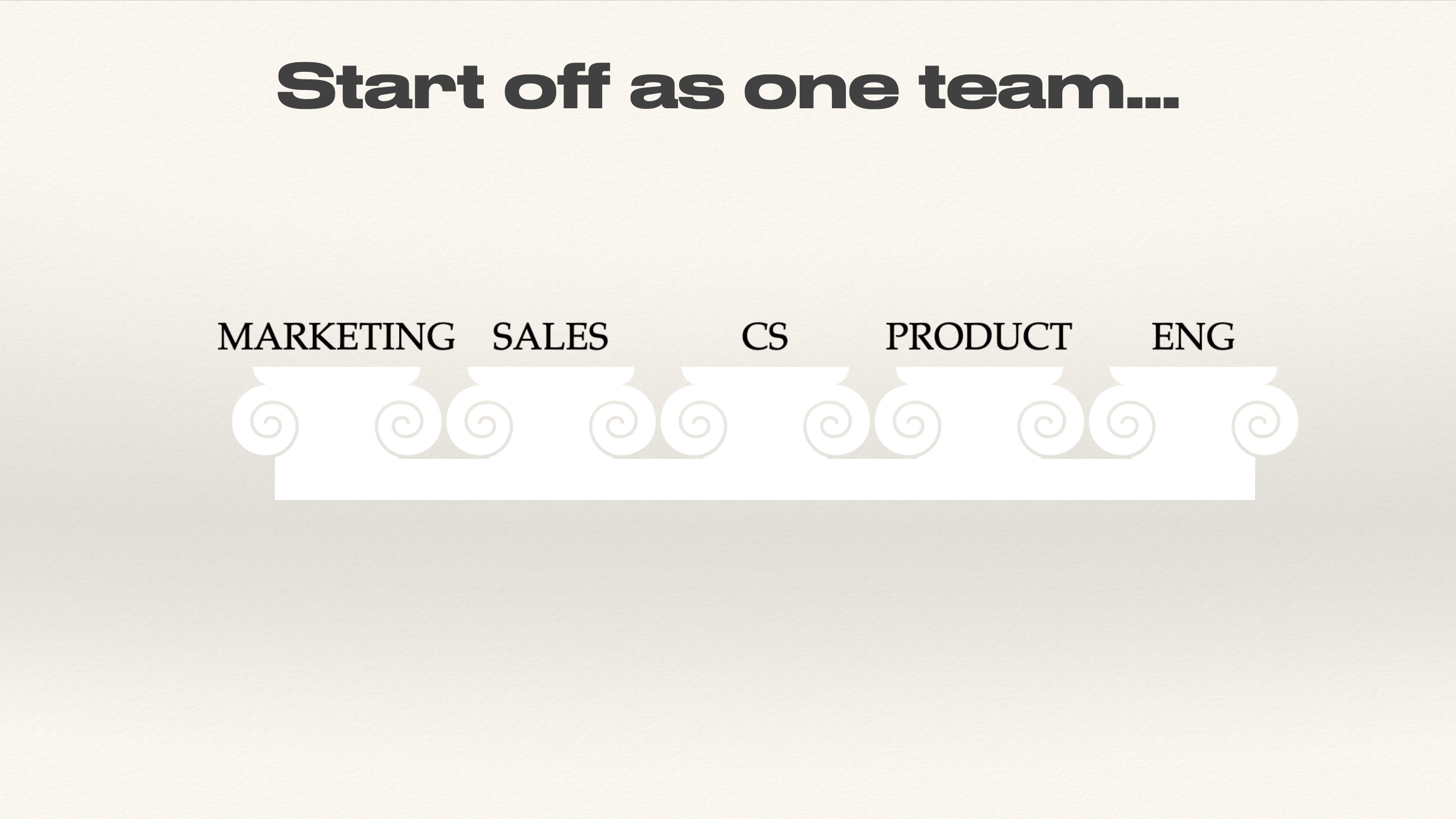
You launch a company, you get some initial traction. And soon founders run out of their own expertise or bandwidth and start surrounding themselves with functional experts. Marketing, Eng, etc.
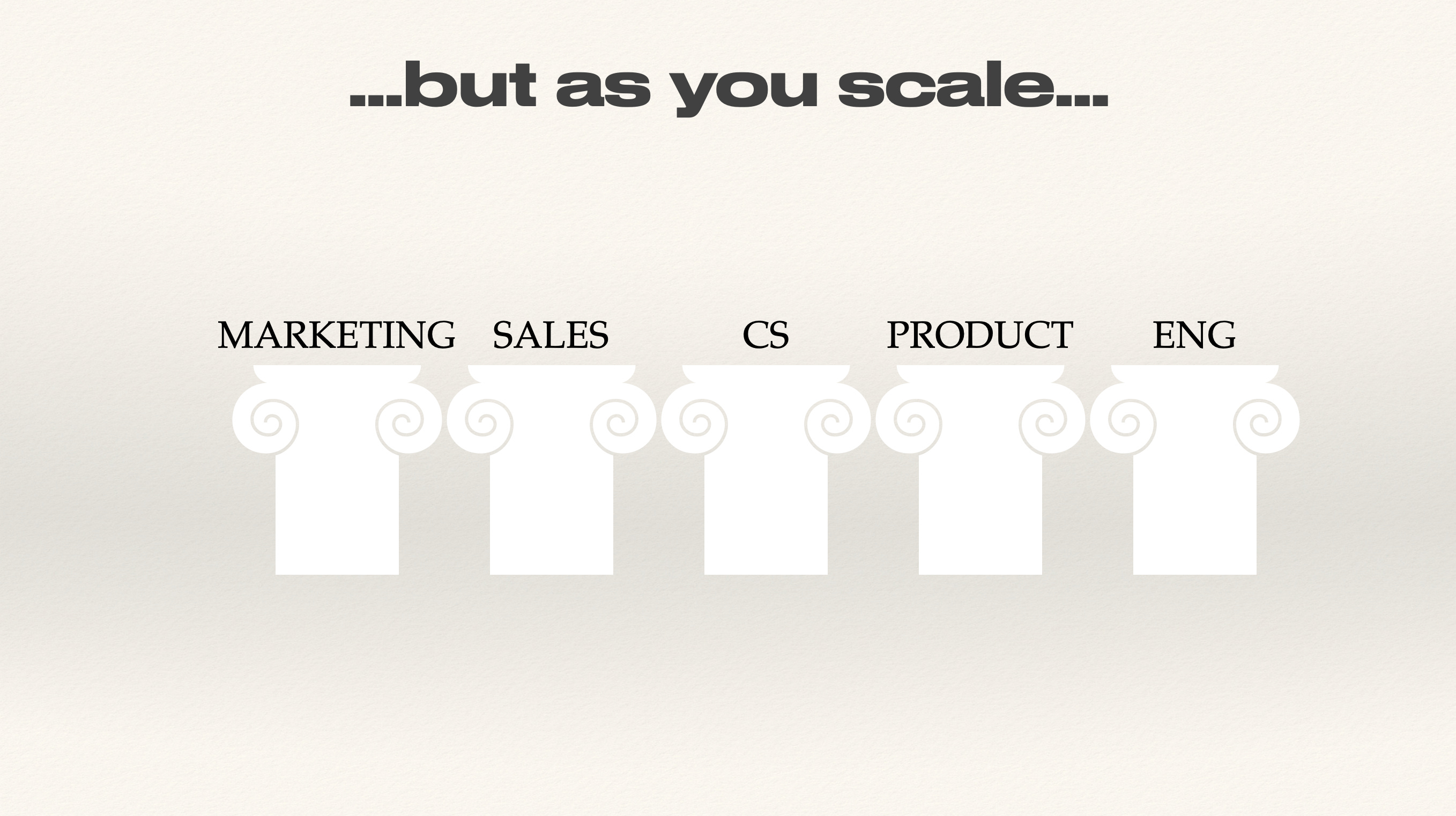
As you scale, though, a lot of these functions start growing. Often at different paces but with equal zeal to prove their worth, expand their scope, and build opportunity for their people.
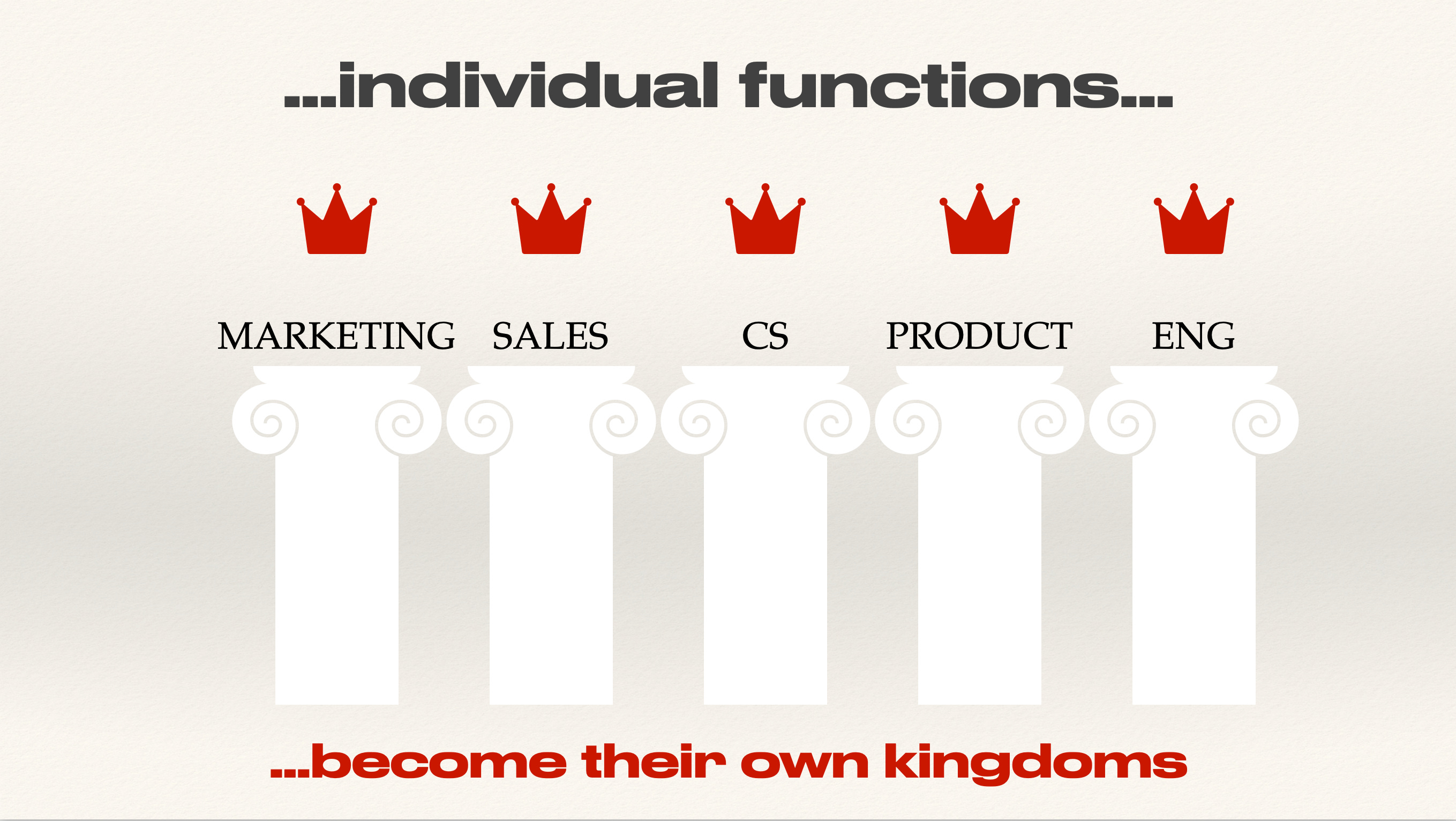
The issue is when these leaders build their own little kingdom. They have their own KPIs, tools, and ways of working. Each kingdom has their own King (or Queen) with a crown and he or she is totally consumed by its power. By the time this has happened getting people to work together - often through OKR frameworks, strategy sessions, cross-functional initiatives, etc, it is too late. Teams are too far apart to truly trust each other, argue (constructively) with each other, follow through and drive results. This is what a lot of people call “politics.”
But a company is not just someone’s baby and most cherished accomplishment. A company needs to generate revenue to survive. Without revenue, the company wouldn’t have people, or resources, or any purpose.
A company is a revenue-generating system.
But a system can’t operate if its parts are forever pulling in different directions. I.e. when you get kingdoms, you get silos. And when you get silos, you get revenue leakage.
The biggest mistake: letting siloes consume the company
Siloes can break a company. The ultimate issue with siloes is that they lead to missed new customers, mishandled current customers, and a lack of understanding where the problem lies. That’s after they have unravelled everything on their path to the customer, from your work standards, to basic business common sense to team morale.
I have learned a lot in my tech career - from Uber’s Exec product, to Hopin’s hiring practices, and various advisory roles now - and for the keynote I put together a list of some of the signs of emerging siloes in a company. The list is not exhaustive. But paints a picture. I don’t want to go through all of them, but I do want to mention the first one: leadership.
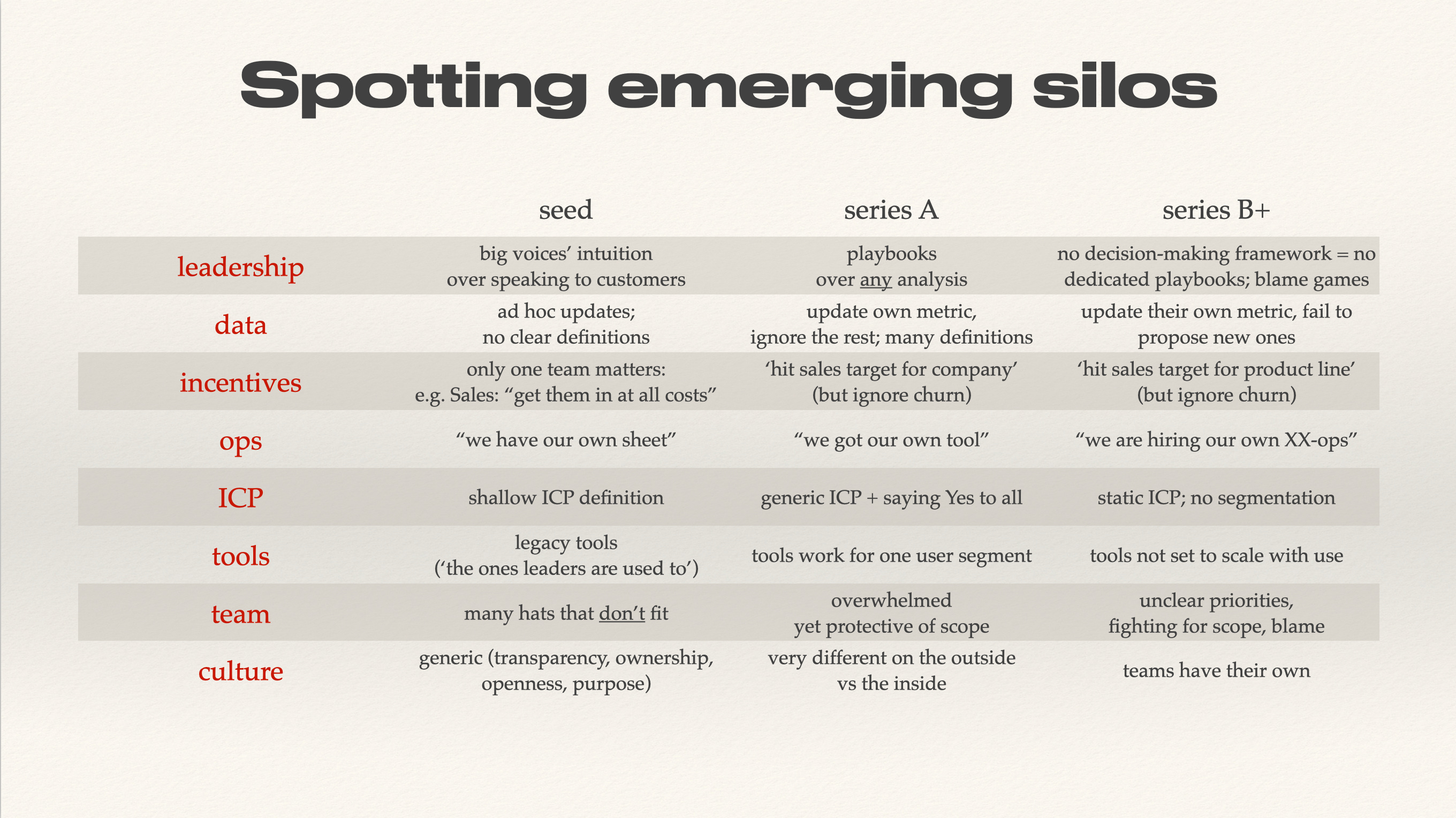
Siloes are much less likely to exist if the siloed thinking of leadership is addressed first. This is why it is on top of my list.
The mother of all silos: Leadership
Starting in the early days, the biggest mistake I have seen is founders prioritising some loud voice’s intuition over customers. It is comfortable to sit in the confidence of a big gorilla. But it leads you astray. Later, the next mistake is falling for ready-made playbooks brought in by the next shiny hire. Yes that Dropbox VP talks a big talk, and can show a big book of business, but your company is not Dropbox. Even if it is using the same commercial GTM motion. Later, some proponents of keeping the company “flexible”, and eradicating any effort to put structure in place, leaves companies with no formalised decision framework. This leaves decisions at the mercy of the rigour leaders are willing to spend on an individual initiative. It is inconsistent, leaves important decisions with no analysis, and less important ones with too much of it.
And no, no amount of strategy sessions, planning sprints, or masquerading-as-fancy AI tools can eradicate the silos.
Final Word
There is lots to be said about how to build a company as fully-functional system. Siloes are the first weed to minimize. You won’t get rid of it 100%. It is unrealistic to believe you would. But if you are aware and you can spot the early signs, you have a much higher chance building a system, which will work well in the good times, and will support you through the tough times.
More on all of this in the playbook.